Our daily cut-off time is 3:30 PM.Orders placed after 3:30 PM cannot be combined for shipping.Single orders will be dispatched if possible; otherwise, they will be shipped by 11:00 AM the next business day.
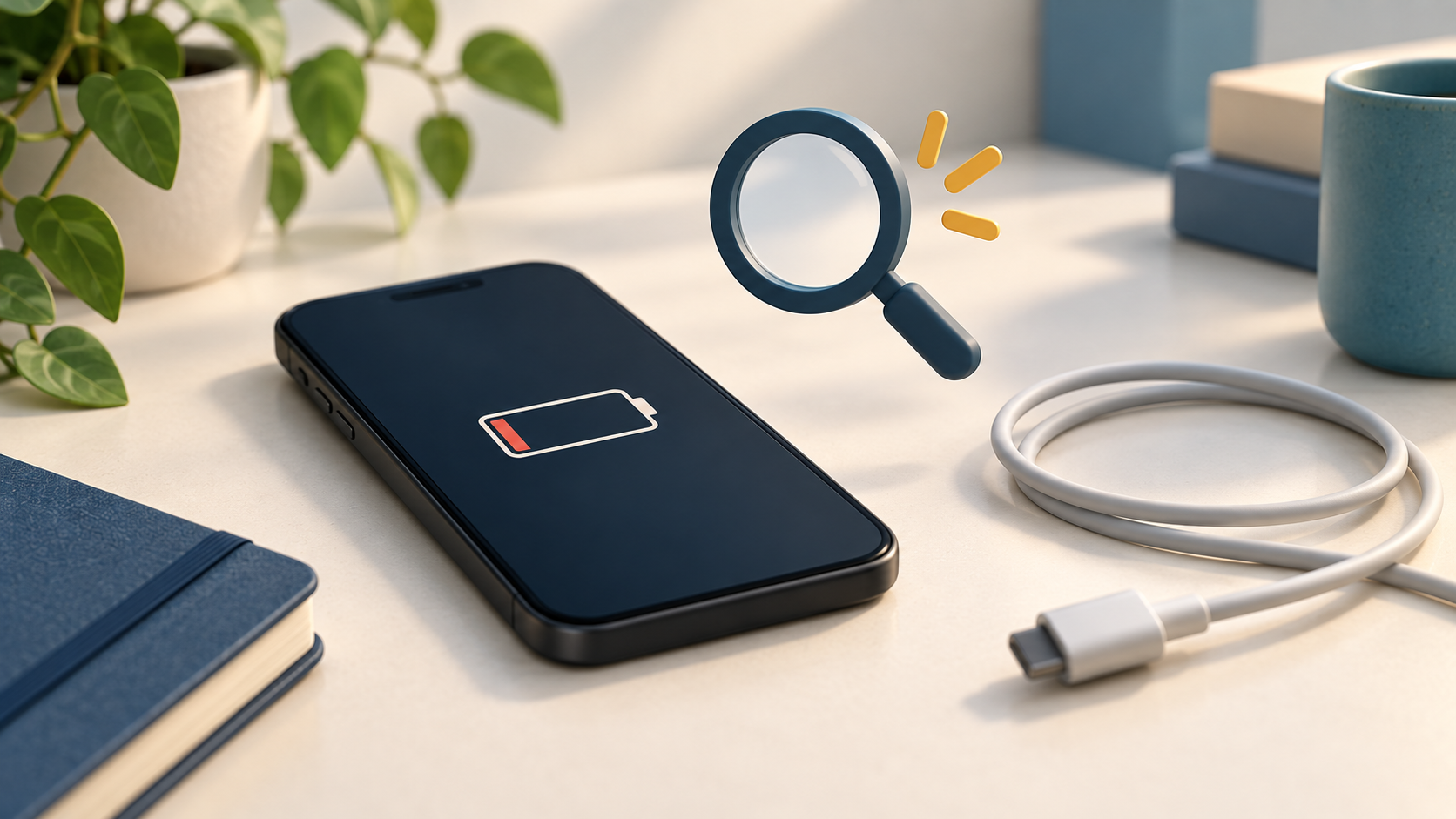
AI-generated concept illustration; not a product or repair photograph.
An iPhone that will not charge does not automatically need a new battery or charging port. Start by checking for damage or a liquid warning, then compare a suitable cable, adaptor and power source. Record what changes. If the phone remains unresponsive or the connection looks damaged, stop experimenting and request an assessment. The steps below help you make useful checks without opening the phone or treating a symptom as a confirmed diagnosis.
1. Stop first if there may be damage
Do not continue charging a phone that is bulging, has a lifting screen, or may have a damaged battery. Stop using damaged charging cables or adaptors too. Apple's iPhone safety information warns against using a device when damage is suspected.
A cracked display and a charging fault together are not the same situation as a phone that works normally with one particular cable. Tell the repairer about drops, liquid exposure and physical changes rather than reporting only “battery problem”. This helps frame the assessment without deciding the cause in advance.
2. Follow liquid warnings before trying another cable
If a liquid-detection alert appears, disconnect the cable. Leave the phone and cable ends to dry before reconnecting. Apple's liquid-alert guidance recommends a dry area with airflow and warns against heat, compressed air, inserting objects or putting the phone in rice.
The same guidance says to wait at least 30 minutes before trying again; drying may take up to 24 hours if the alert returns. Those timings are not permission to charge a still-wet connector. Follow the warning and seek help if the problem persists.
Do not use a routine charging test to work around a liquid alert. Note whether the warning appears with one cable or several and tell the repairer. Keep this information separate from any visible physical damage.
3. Test the charging setup, one change at a time
For a dry phone with no suspected damage, use a suitable, undamaged charging cable and adaptor. Try a different wall outlet and connect directly instead of through a hub. Apple's charging troubleshooting guide includes checks for cables, connections, the power source and the phone's response.
Change one item, then record the result. For example:
A different cable works: record which cable failed; do not assume the phone's battery is faulty.
A different adaptor or outlet works: include that result when asking for help.
The connector fits poorly or needs pressure: stop forcing it and arrange inspection.
No suitable setup works: the symptom needs further assessment, not an automatic parts order.
You do not need to buy several accessories simply to complete this list. If you lack a known suitable alternative, say so. A clear description of what you could and could not test is more useful than a guess.
4. Give an unresponsive phone time, then use the right restart instructions
Apple's charging guide suggests charging for half an hour, then using the model-appropriate force restart if the phone remains unresponsive, followed by another half-hour charge. Apply that sequence only after the safety and liquid checks above.
The button combination differs by model, so use the instructions for your exact iPhone in that guide. Do not follow an undated shortcut that groups all iPhones together. A force restart is not a reason to erase the phone or perform a factory reset as an initial charging test.
5. Distinguish “not charging” from a charging limit
If the phone charges to around 80% and then pauses, read the displayed message before ordering a repair. Apple's charging guide explains that Optimised Battery Charging, temperature and a configured charge limit on supported models can affect when charging continues.
Record the message and percentage rather than switching off features simply to make the number rise. A phone that gains charge and stops at a stated limit presents different evidence from a completely unresponsive phone.
If it charges successfully but runs down too quickly, that is a different question. Our iPhone battery replacement decision guide discusses everyday battery life and when replacement may be worth considering.
6. Inspect visually; do not dig into the port
Look for obvious damage or an obstruction without inserting anything. If the plug will not seat normally, do not force it, scrape the contacts or put liquid into the connector. Arrange a port inspection or cleaning assessment if needed.
This guide deliberately stops short of a DIY port-cleaning procedure. The aim is to gather useful evidence without adding another possible fault. Also avoid holding a cable at an angle to keep an unreliable connection working.
What to tell a repairer
A short note can make the assessment more productive. Include:
Your exact iPhone model and when the problem began.
Whether it powers on, shows a charging symbol or displays an alert.
Which suitable cables, adaptors and outlets you tried, and the result of each.
Any drop, liquid exposure, loose connection or other fault.
Whether important data is backed up, if the phone is still usable.
Ask what assessment costs, whether extra repairs need your approval, and what the quoted total includes. If a replacement part is proposed, ask which part will be used and what warranty terms apply. Do not include passwords or verification codes in an initial enquiry.
Frequently asked questions
Does wireless charging prove that the charging port is faulty?
No. If you already know that your exact model supports wireless charging, its response is another observation to report. It does not by itself isolate the port from the cable, adaptor or other parts of the wired charging path.
Should I replace the battery first?
Not just because the phone fails to charge. Describe the symptoms and ask for an assessment before approving a particular part. Battery replacement is a decision made from the assessment, not the name of the symptom.
Should I clean the port with a toothpick or compressed air?
This guide does not recommend either as a home troubleshooting step. Use a visual check only and seek help with obstructions, damage or a poor-fitting connection. Follow Apple's liquid-warning instructions whenever moisture is involved.
Still unable to charge?
See Raytech's iPhone repair service and request an assessment with the details above. Confirm the diagnosis, proposed work and current quote before deciding.
Guide updated 16 September 2026. General troubleshooting guidance, not a diagnosis or a DIY repair tutorial. Cover image: AI-generated concept illustration, not a real repair or a specific phone model.